The Terrarium

Thomas Merckx
Exo Terra Communication Manager
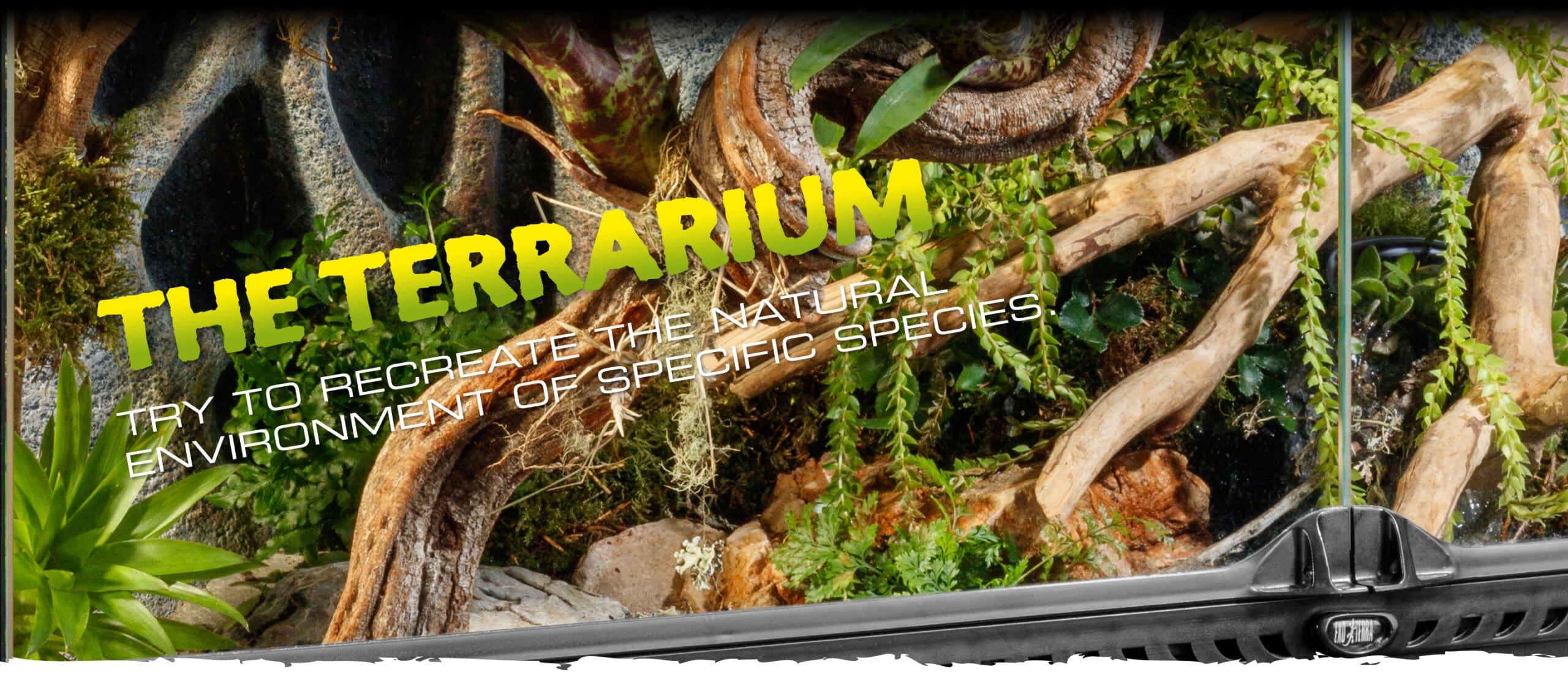
Terrariums are small ecosystems with which we try to recreate the natural environment of specific species. It is a miniature world where animals and plants thrive, interact with their surroundings, resulting in a harmonious balance. The terrarium is without doubt the most important aspect of successful reptile and amphibian keeping.
Characteristics
Typically, the terrarium consists of transparant glass or plastic panels, equipped with ventilation vents. It is decorated with live or artificial plants, substrates, rocks, and other types of ornaments. The bottom can be sealed to create a semi-closed self-sustaining ecosystem, where the water and nutrients cycle through the plants and soil (e.g. Paludaria). Plants will absorb carbon dioxide and release oxygen through photosynthesis, contributing to a healthy atmosphere within the enclosed space.
History
Terrariums gained popularity in the mid-19th century as a way to observe and study animals, plants and other organisms in a controlled environment. Since the 70s, terrarium keeping has experienced several boosts in popularity as people in urban environments live in smaller homes and seek to reconnect with nature. Terrariums offer a low-maintenance and visually appealing alternative for individuals who do not have the space to keep animals at home or do not have access to outdoor gardens. They offer a unique opportunity to bring nature indoors and enjoy the beauty of an indoor ecosystem.
Recreating a micro habitat
The trend towards more realistic and naturalistic terrarium landscapes has made reptile and amphibian keeping ever more exciting and satisfying. This new dimension has created, not only an opportunity for us all to educate ourselves about the natural conditions in which reptiles and amphibians live, but provided a whole new perspective! The focus is no longer the actual animal itself as it is now part of the the habitat that is being recreated. Just like fish in a Dutch aquarium - reptiles and amphibians are no longer seen as pets, but as a crucial element in a simulated biotope or micro habitat. Simulating these natural habitats enables us to enjoy that little piece of amazing wilderness in our own homes. The Exo Terra Natural Terrarium became the perfect canvas for “terrascaping” - the craft of arranging natural plants, mosses, as well as vines, branches, stones, or Exo Terra decor, in an aesthetically pleasing, natural manner within a terrarium. In effect, recreating a micro habitat.
Species
Terrariums serve both educational and decorative purposes. They provide a captivating way to observe the growth and interactions of these fascinating critters. On top of that, they are amazing decorative centrepieces, adding a touch of nature to any indoor space. The terrarium combines biology, ecology, and aesthetics. It provides a unique opportunity to create and observe a small ecosystem, bringing a piece of the wilderness into our daily lives.
Thomas Merckx
Exo Terra Communication Manager