

Lighting

Emmanuel Van Heygen
Exo Terra Brand Manager
The Sun is the Earth's light source, providing visible light, heat, and the essential energy for biological activities. The sun's energy is indispensable, as it fuels all life forms on our planet. In its absence, the Earth would rapidly dissipate its energy, leading to the extinction of all life forms.
Reptiles & amphibians offer a unique glimpse into the complexities of nature. As our understanding of them deepens, there's a growing realization in the world of herpetoculture - to cater to their needs truly, we must look to their natural habitats. We find the blueprint for their well-being in the dense forests, arid deserts, and rugged landscapes. This approach isn't just about mimicking their environment; it's about capturing the essence of their wild existence, about 'Make Your Reptiles Feel at Home'.
The comprehensive spectrum of natural sunlight, encompassing ultraviolet to infrared, is not just a contextual backdrop but is integral to their existence. Administering the appropriate spectrum and light intensity, including UV-B and Far Infrared (IR-C), is not a dispensable luxury but a prerequisite. It is instrumental in catalyzing their well-being, facilitating vitamin D3 synthesis – essential for calcium absorption – and promoting holistic organ function, vitality, and immune response. Moreover, the proper lighting awakens their world in color, enhancing their visual experience.
Within herpetoculture, certain misconceptions have occasionally clouded our understanding. Many amphibians, including frogs, yield tangible benefits from exposure to UV-B radiation. Although their solar interaction might not be as conspicuous as in some reptiles, they unequivocally harness UV-B radiation for diverse physiological functions.
Species previously classified as 'nocturnal' were often deprived of indispensable full-spectrum UV-B illumination. Subsequent to nuanced observations, it has become clear that species such as the leopard and crested gecko exhibit crepuscular behavior, becoming active in the subdued luminosity of dawn and dusk.
Solar energy pierces through even within the dimly lit habitats of reptiles and amphibians, establishing pockets of ultraviolet zones. How daylight infiltrates rock crevices or illuminates the forest floor demonstrates the evolutionary adaptations of these animals in harnessing this energy. Their behaviors, ranging from selective basking to sheltering, reveal sophisticated tactics refined over millennia. These behaviors are not rudimentary routines but elaborate biological responses activating essential physiological processes.
While many species get incidental exposure to ultraviolet rays, we've identified four distinct UV Index exposure zones within the diverse world of reptiles & amphibians:
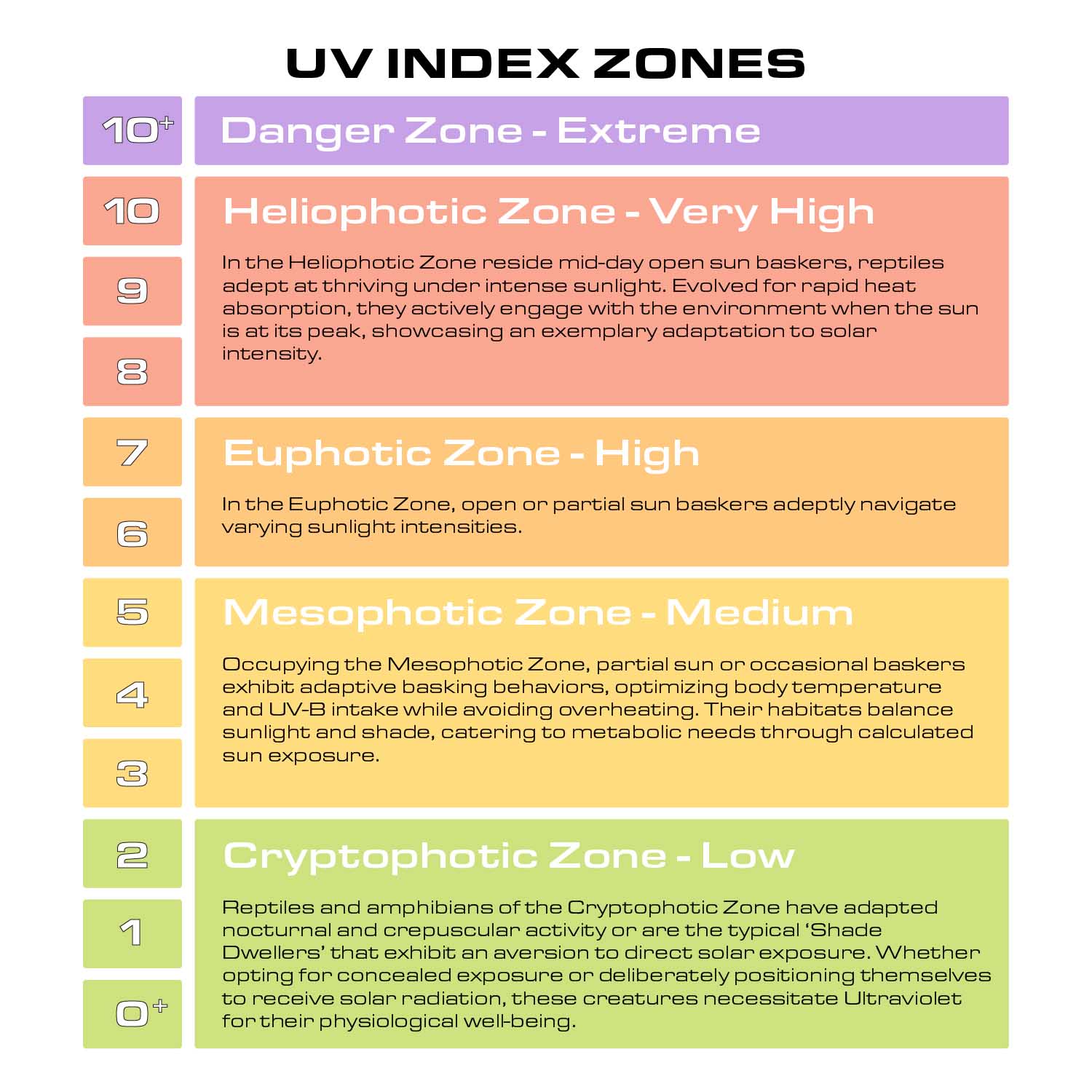
The UV Index Zones signify the upper limits of exposure, serving as essential guidelines for configuring terrariums. It is imperative to establish gradients within the terrarium, ensuring that these maximum UV Index values are exclusively designated to basking spots. These readings must not surpass the stipulated values within any potential dwelling or basking areas inside the terrarium, safeguarding the inhabitants’ wellbeing. Offering a variety of exposure levels within reach of the housed animals is vital, but under no circumstances should higher values be accessible to them. This cautious arrangement is crucial for maintaining a balanced and safe environment, allowing the animals to regulate their exposure according to their individual needs, thereby promoting healthier and more natural behaviors within the controlled habitat.
In our quest for responsible herpetoculture, we're not just providing for reptiles & amphibians; we're reconnecting them to the wild environment from which they originated. It's a journey of respect, understanding, and profound admiration for these incredible beings.
Emmanuel Van Heygen
Exo Terra Brand Manager
"While many species get incidental exposure to ultraviolet rays, we've identified four distinct UV Index exposure zones within the diverse world of reptiles & amphibians..."