
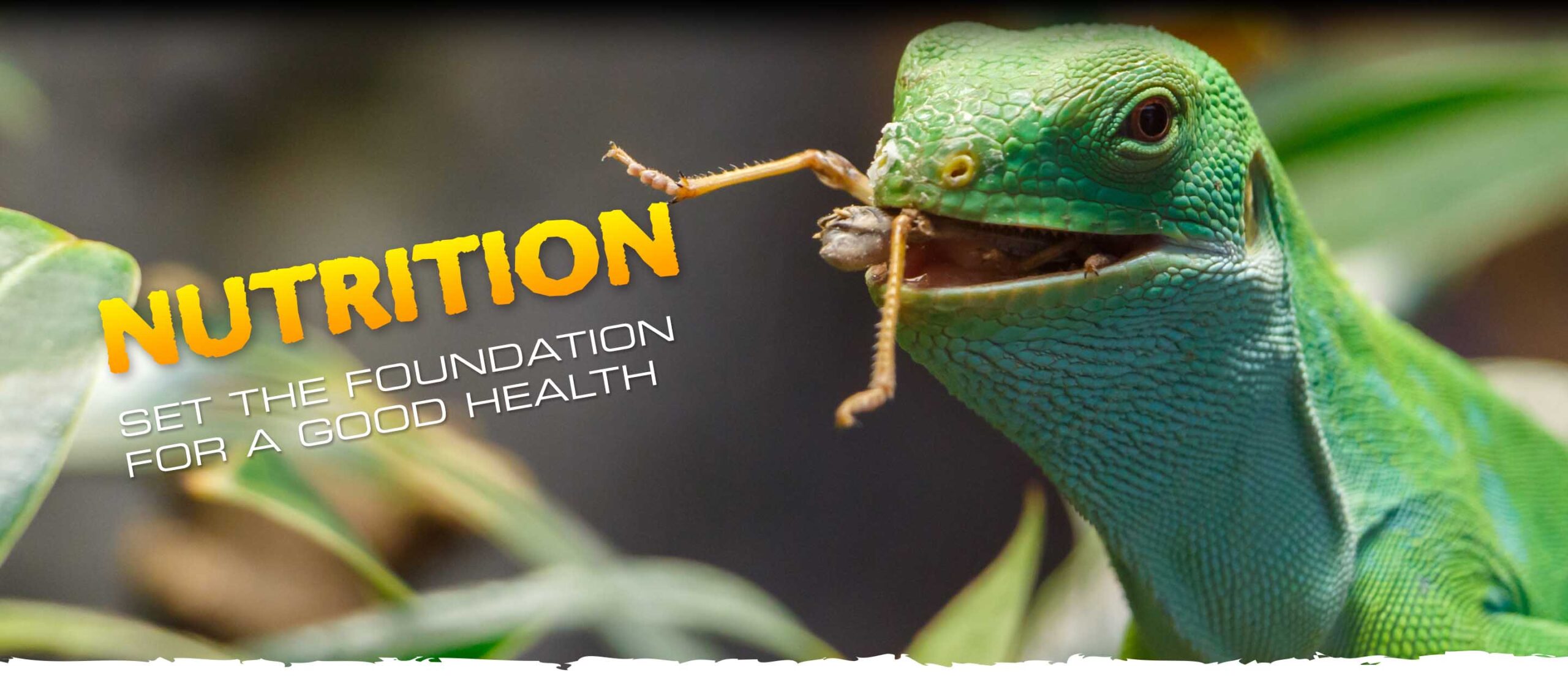
Nutrition

Thomas Merckx
Exo Terra Communication Manager
Understanding and providing the right nutrition is essential to ensure the longevity and vitality of your animals. To meet the nutritional needs of reptiles and amphibians, it's crucial to take the dietary requirements of each species, and the different stages of development into account.
Proper nutrition early in life sets the foundation for good health.
Like all living beings, reptiles and amphibians require appropriate nutrition to grow and develop. Hatchlings and juveniles need adequate nutrients to support their rapid growth, bone development, and organ maturation. Some groups shift from a higher protein diet in their juvenile stage to a higher fibre diet in their adult stage (e.g. bearded dragons). Often these higher protein diets consists of sprouts, young greens and growing foliage, but some groups fulfil their need for protein by eating insects or animal matter.
Source of energy
Nutrition will provide the energy needed for the various metabolic processes in their bodies. A well-balanced diet ensures they have enough energy to carry out essential physiological functions.
Crucial for successful reproduction
Females need sufficient nutrients to develop healthy eggs, while males require energy for courtship behaviours and mating. A lack of proper nutrition can lead to reproductive issues and may hinder the success rate of breeding.
Overall health
A well-nourished animal will have a stronger immune system, making it more resistant to diseases and infections. Essential vitamins and minerals play a key role in boosting immunity and helping fight off illnesses. Many reptiles have intricate bony structures and shells that require specific nutrients to remain strong and healthy. Calcium and vitamin D, for example, are essential for proper bone and shell development, and maintenance. Inadequate calcium intake can lead to metabolic bone disease; a common issue in the hobby. Furthermore, a well-balanced nutrition is crucial for maintaining healthy skin and aiding in the shedding process. Inadequate hydration and nutrient deficiencies can result in improper shedding, which can lead to skin infections and other health problems.
Species-specific nutrition
Different reptile and amphibian species have unique dietary needs based on their natural habitats, behavior, and physiology. Understanding the specific nutritional requirements of each species is essential for their optimal health and well-being. Most of them have a rather primitive digestive tract making them very specialized feeders. Certain species have no means of digesting plant fibres, while others have difficulty digesting high protein sources (e.g. insects, mice).
Providing a balanced and varied diet that closely mimics their natural food sources is vital to ensure the health and longevity of these fascinating creatures. In some cases, supplementation with vitamins and minerals may be necessary.
Thomas Merckx
Exo Terra Communication Manager